.empatyzer / stories← Back to EmpatyzerPL
09 / 30

Differences that change a conversation

A country is not an instruction manual

Cultural knowledge and stereotyping

Anna wants to account for Amira’s culture. The map starts answering for the person.
Download the full comic Page ↗ PNG SVG PPTX
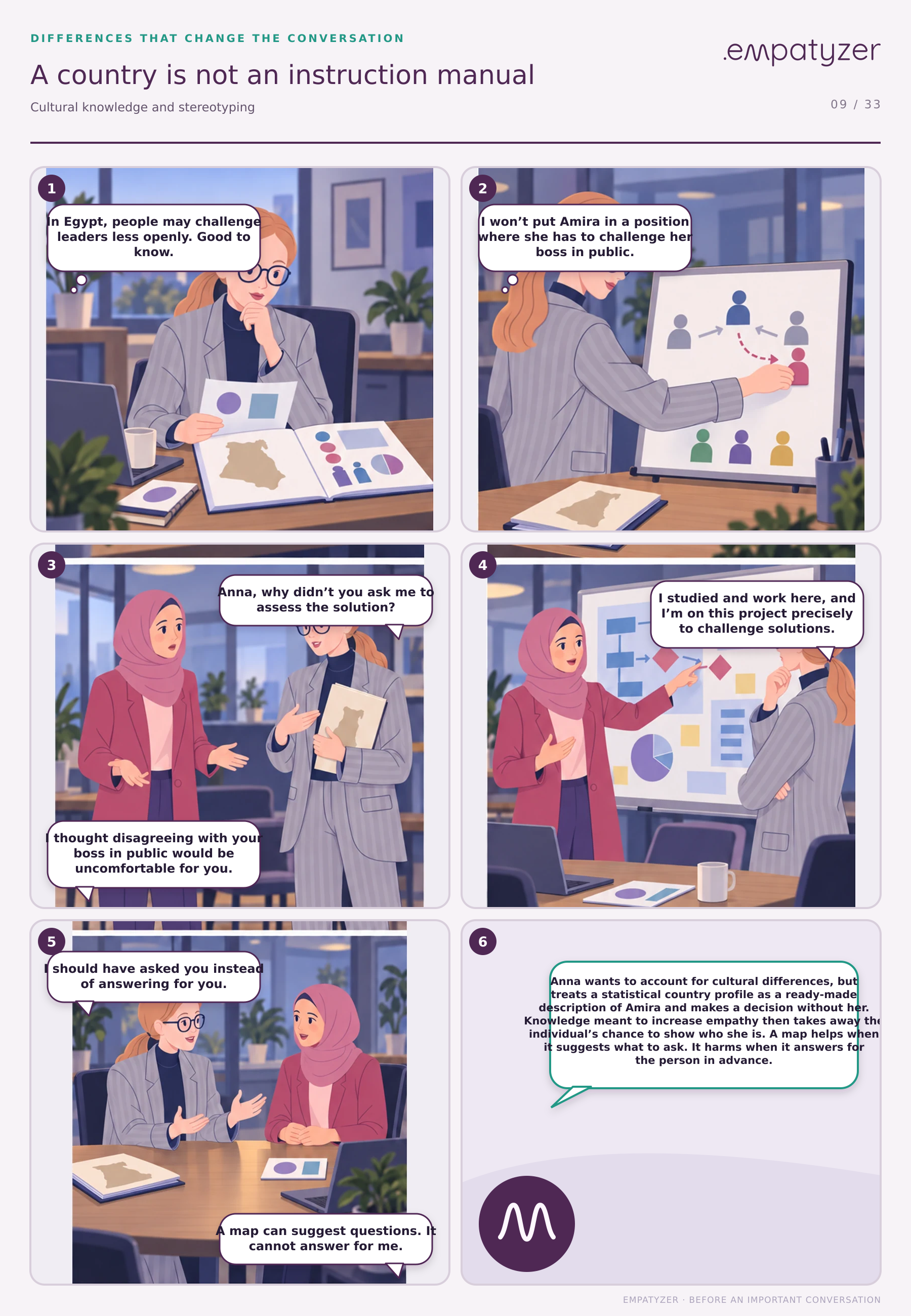
Anna reads a short cultural profile of Egypt before a meeting.
In Egypt, people may challenge leaders less openly. Good to know.
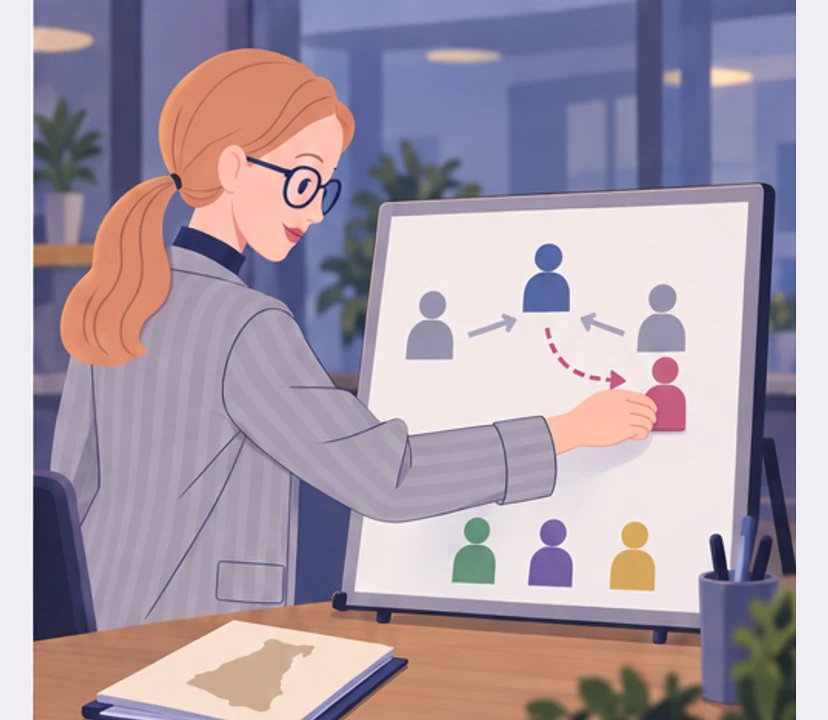
Anna plans a debate and leaves Amira out of the critical role.
I won’t put Amira in a position where she has to challenge her boss in public.
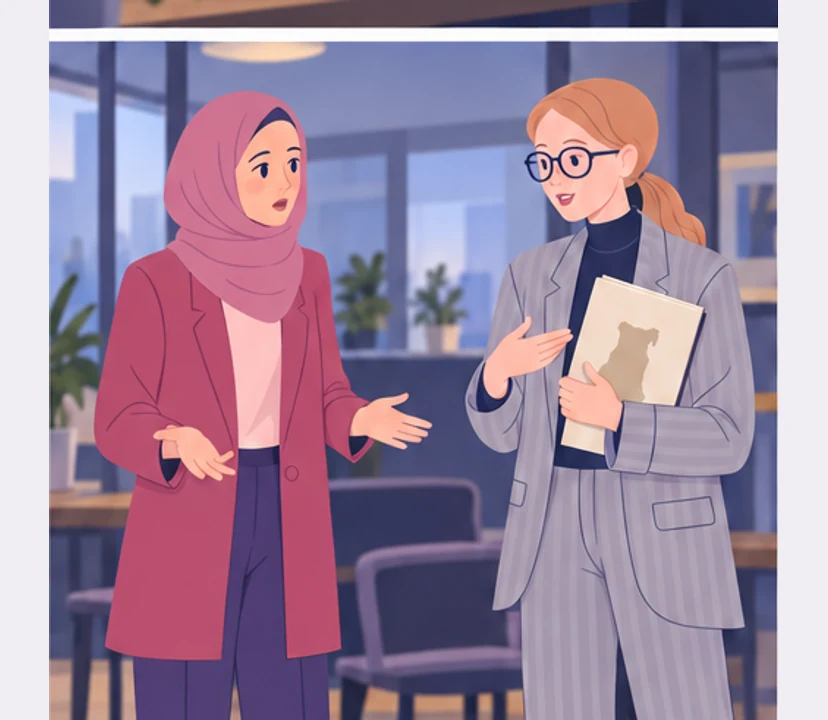
After the meeting Amira asks Anna why she was excluded. AFTER THE MEETING
Anna, why didn’t you ask me to assess the solution?
I thought disagreeing with your boss in public would be uncomfortable for you.
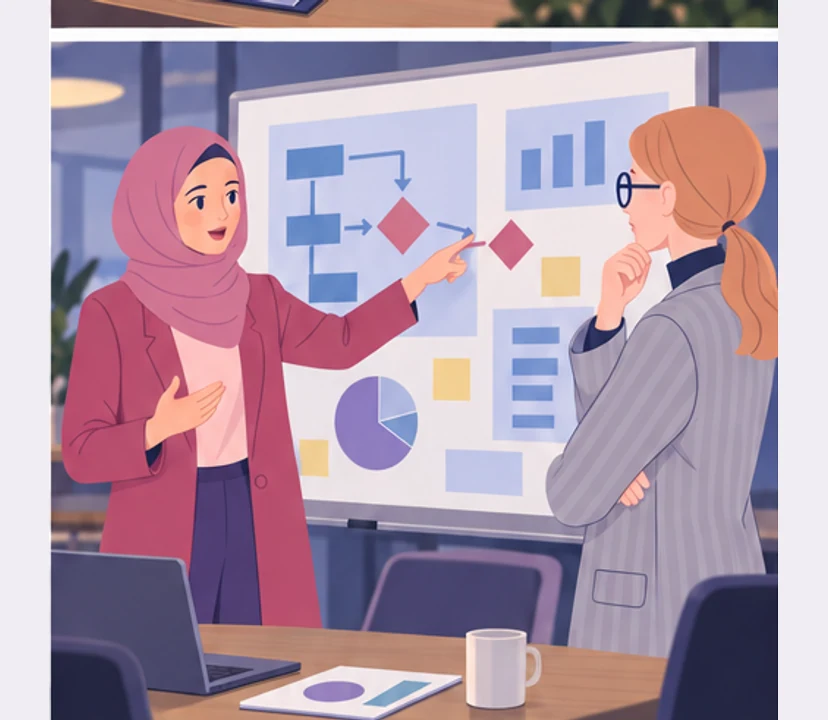
Amira explains her experience and role in the project.
I studied and work here, and I’m on this project precisely to challenge solutions.
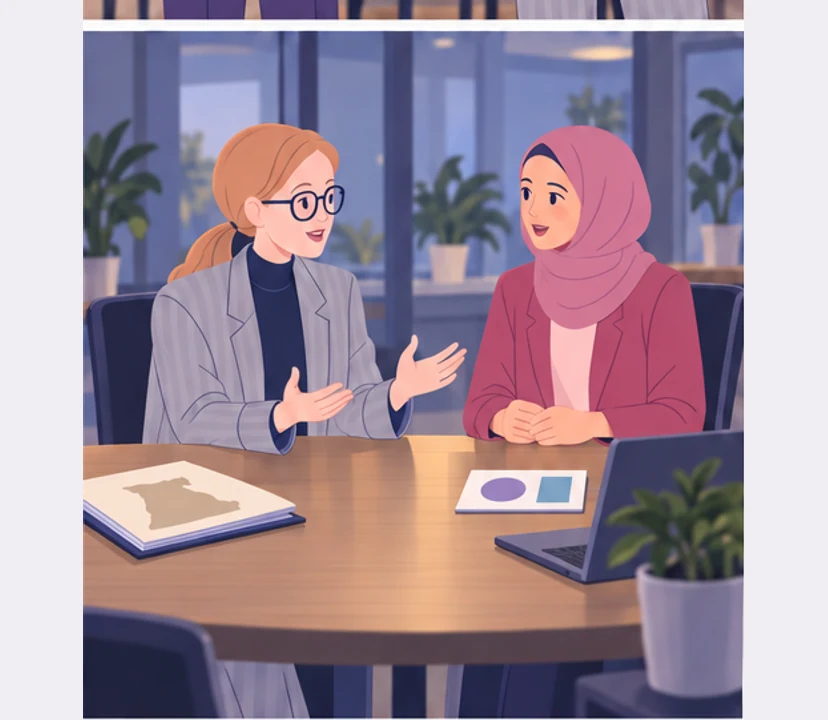
Anna sets the country map aside and asks Amira about her own preferences.
I should have asked you instead of answering for you.
A map can suggest questions. It cannot answer for me.

Em, the Empatyzer coach
Anna wants to account for cultural differences, but treats a statistical country profile as a ready-made description of Amira and makes a decision without her. Knowledge meant to increase empathy then takes away the individual’s chance to show who she is. A map helps when it suggests what to ask. It harms when it answers for the person in advance.