.empatyzer / stories← Back to EmpatyzerPL
43 / 55

Differences that change the conversation

One sentence or the whole story?

Kontekst a zwięzłość

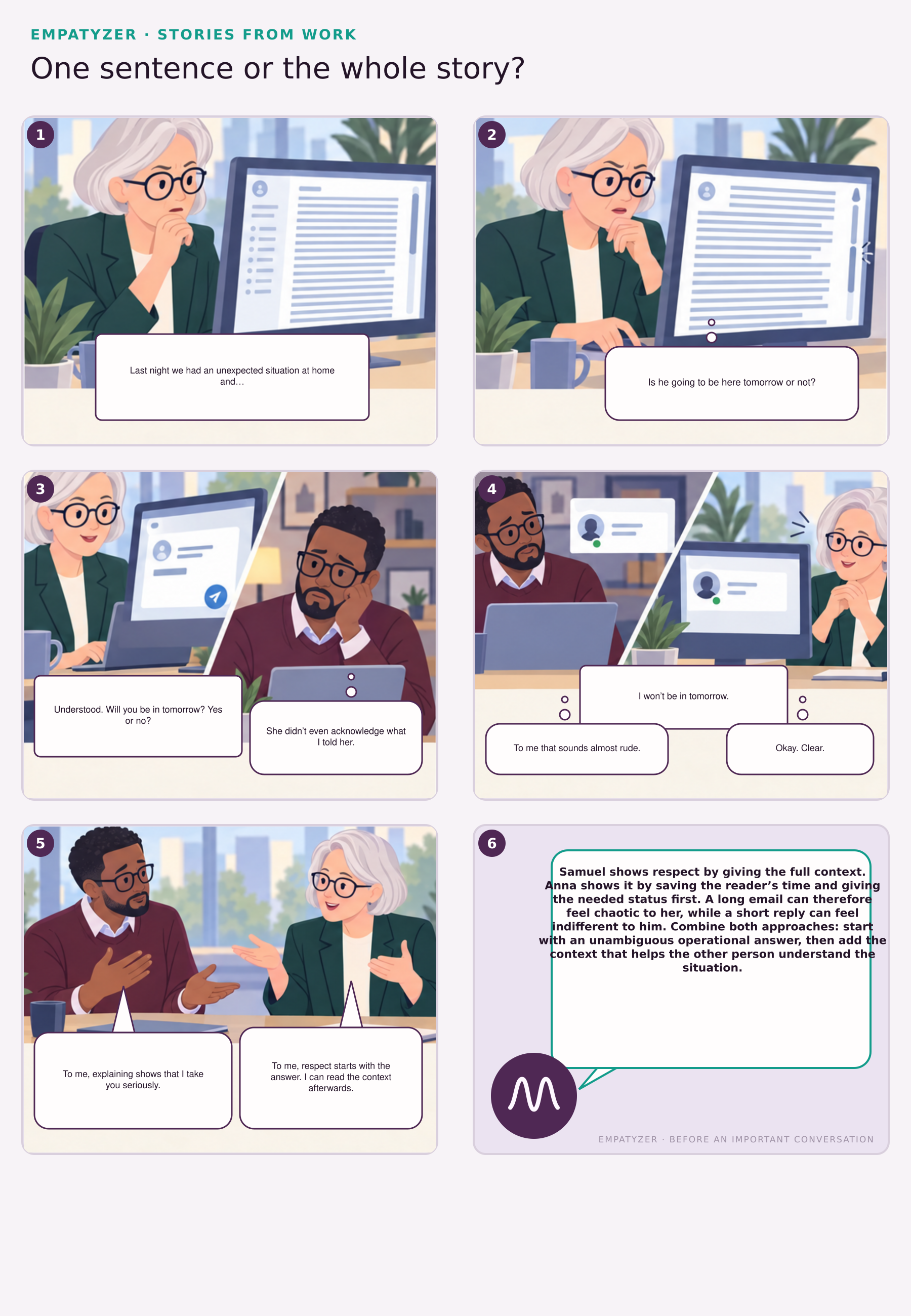
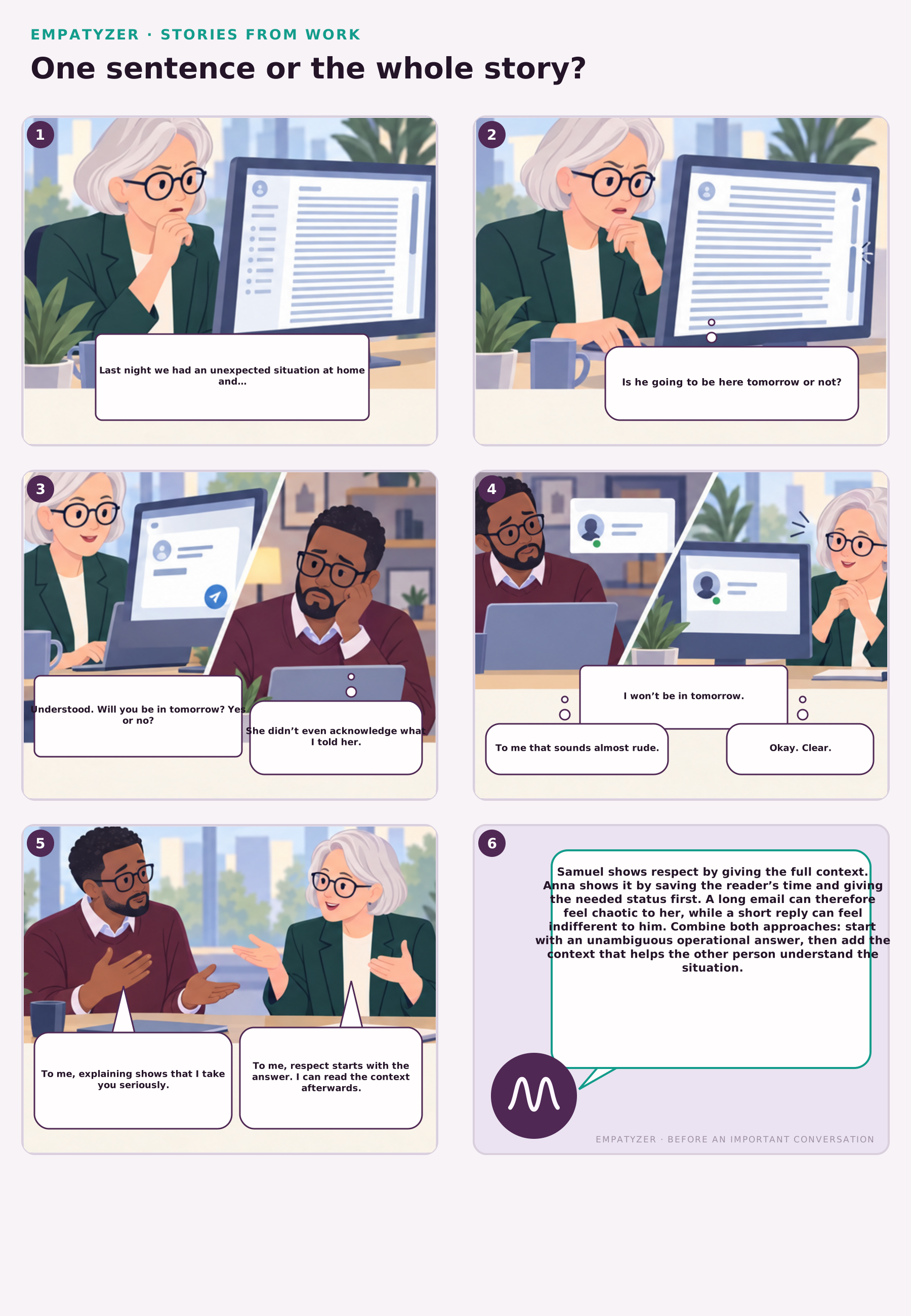
Samuel sees context as part of an honest answer, while Anna needs a short status first. They define a concrete message differently.
Download the full comicPNGSVGPPTX
Samuel, Anna in panel 1 of One sentence or the whole story?.
Wczoraj wieczorem okazało się, że w domu mamy nagłą sytuację i…Last night we had an unexpected situation at home and…
Samuel, Anna in panel 2 of One sentence or the whole story?.
Czy on jutro będzie, czy nie?Is he going to be here tomorrow or not?

Samuel, Anna in panel 3 of One sentence or the whole story?.
Rozumiem. Będziesz jutro? Tak czy nie?Understood. Will you be in tomorrow? Yes or no?
Nawet nie odniosła się do tego, co napisałem.She didn’t even acknowledge what I told her.

Samuel, Anna in panel 4 of One sentence or the whole story?.
Jutro mnie nie będzie.I won’t be in tomorrow.
Okej. Konkretnie.Okay. Clear.
Dla mnie to brzmi prawie niegrzecznie.To me that sounds almost rude.

Samuel, Anna in panel 5 of One sentence or the whole story?.
Dla mnie wyjaśnienie pokazuje, że traktuję cię poważnie.To me, explaining shows that I take you seriously.
Dla mnie szacunek to szybka odpowiedź. Kontekst mogę przeczytać potem.To me, respect starts with the answer. I can read the context afterwards.

Em, trenerka Empatyzera
Samuel okazuje szacunek, dając pełny kontekst. Anna okazuje go, oszczędzając odbiorcy czas i podając najpierw potrzebny status. Dlatego długi mail może dla niej brzmieć jak chaos, a krótka odpowiedź dla niego jak obojętność. Połącz oba sposoby: zacznij od jednoznacznej informacji operacyjnej, a dopiero potem dodaj kontekst, który pomaga zrozumieć sytuację.Samuel shows respect by giving the full context. Anna shows it by saving the reader’s time and giving the needed status first. A long email can therefore feel chaotic to her, while a short reply can feel indifferent to him. Combine both approaches: start with an unambiguous operational answer, then add the context that helps the other person understand the situation.