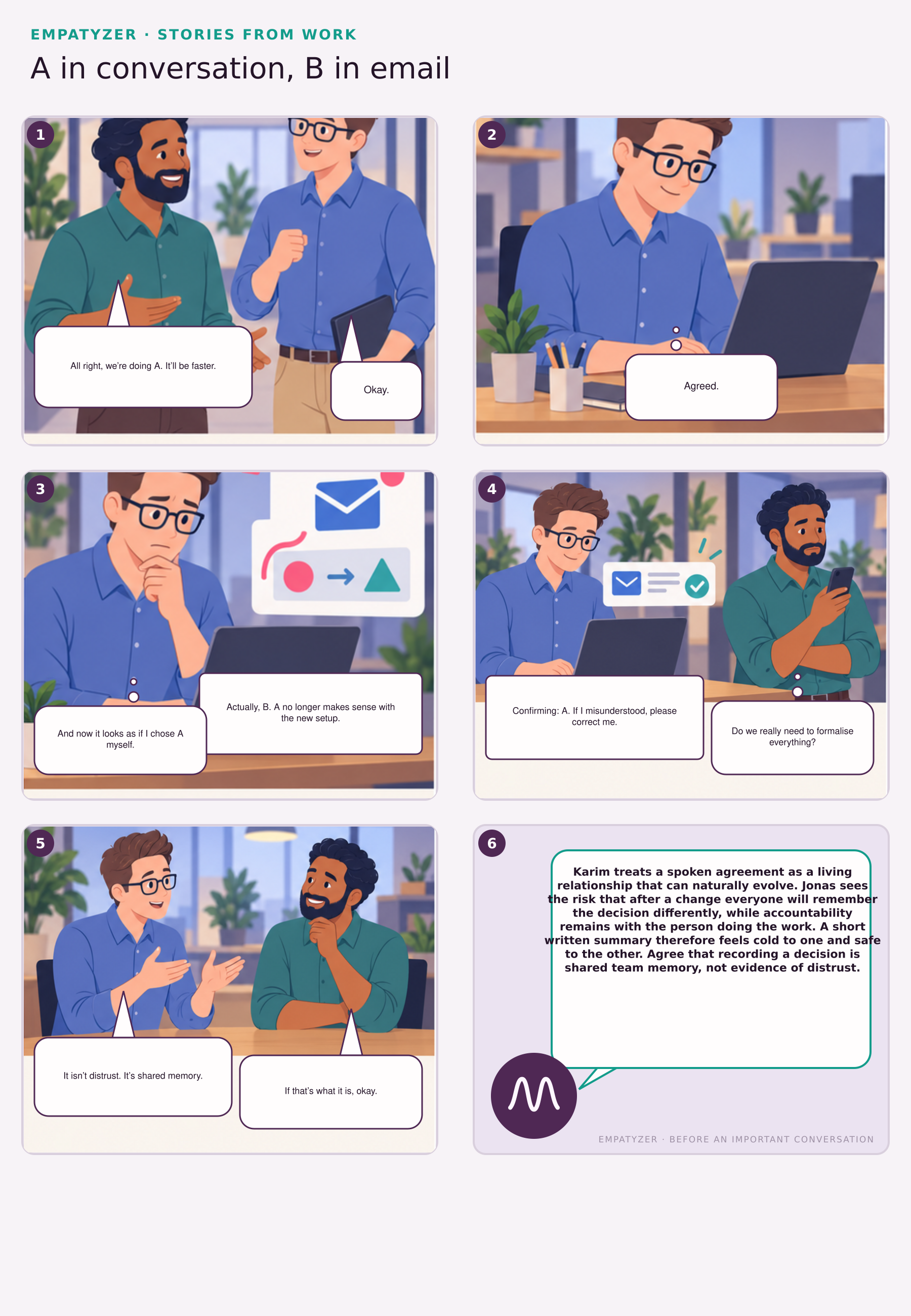
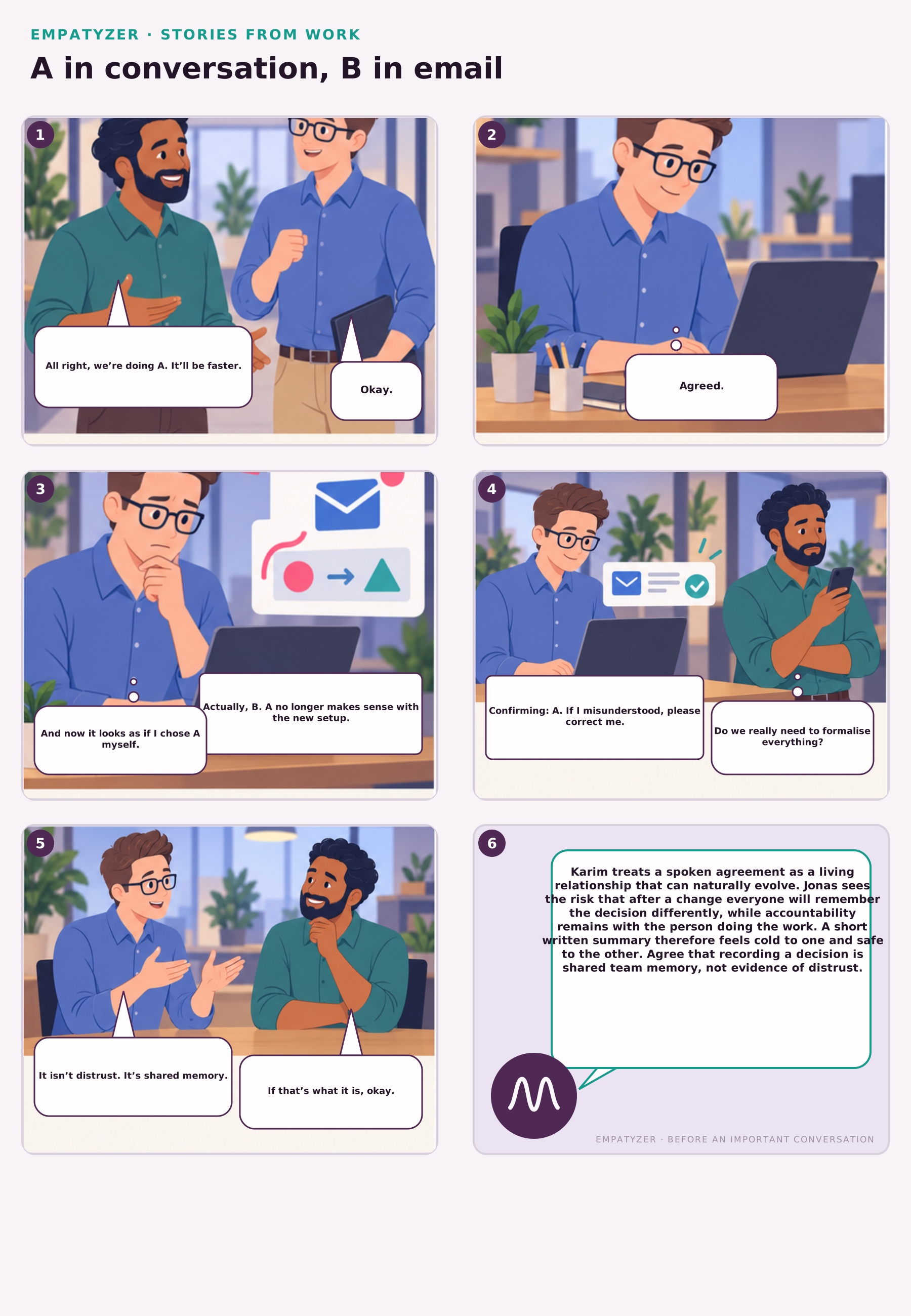
Karim trusts spoken agreements and flexible corrections, while Jonas needs a record. Without a shared trace, they remember the same decision differently.
Dobra, robimy A. Tak będzie szybciej.All right, we’re doing A. It’ll be faster.
Okej.Okay.
2
Ustaliliśmy.Agreed.
3
Jednak B. A nie ma sensu przy nowym układzie.Actually, B. A no longer makes sense with the new setup.
A teraz wygląda, jakbym sam wybrał A.And now it looks as if I chose A myself.
4
Potwierdzam: A. Jeśli źle zrozumiałem, popraw mnie.Confirming: A. If I misunderstood, please correct me.
Naprawdę musimy wszystko formalizować?Do we really need to formalise everything?
5
To nie brak zaufania. To wspólna pamięć.It isn’t distrust. It’s shared memory.
Jeśli tak to traktujemy, okej.If that’s what it is, okay.
6Karim traktuje ustne ustalenie jak żywą relację, którą można naturalnie aktualizować. Jonas widzi ryzyko, że po zmianie każdy zapamięta decyzję inaczej, a odpowiedzialność zostanie przy osobie wykonującej zadanie. Dlatego krótkie pisemne podsumowanie dla jednego brzmi chłodno, a dla drugiego daje bezpieczeństwo. Ustalcie, że zapis decyzji jest wspólną pamięcią zespołu, a nie dowodem braku zaufania.Karim treats a spoken agreement as a living relationship that can naturally evolve. Jonas sees the risk that after a change everyone will remember the decision differently, while accountability remains with the person doing the work. A short written summary therefore feels cold to one and safe to the other. Agree that recording a decision is shared team memory, not evidence of distrust.