.empatyzer / stories← Back to EmpatyzerPL
51 / 55

Differences that change the conversation

Too much detail, then not enough

Szczegółowość a ukryte kryterium

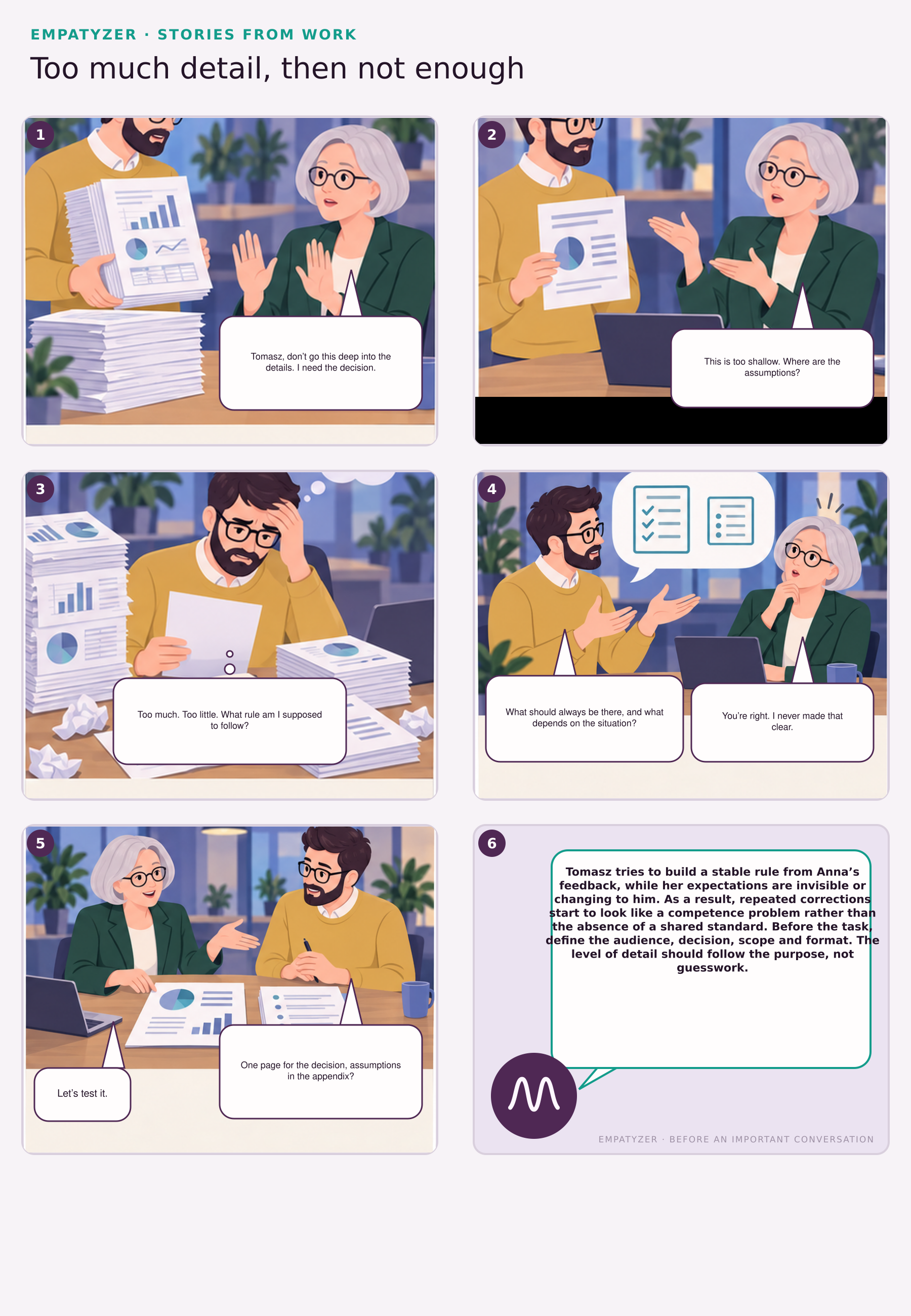
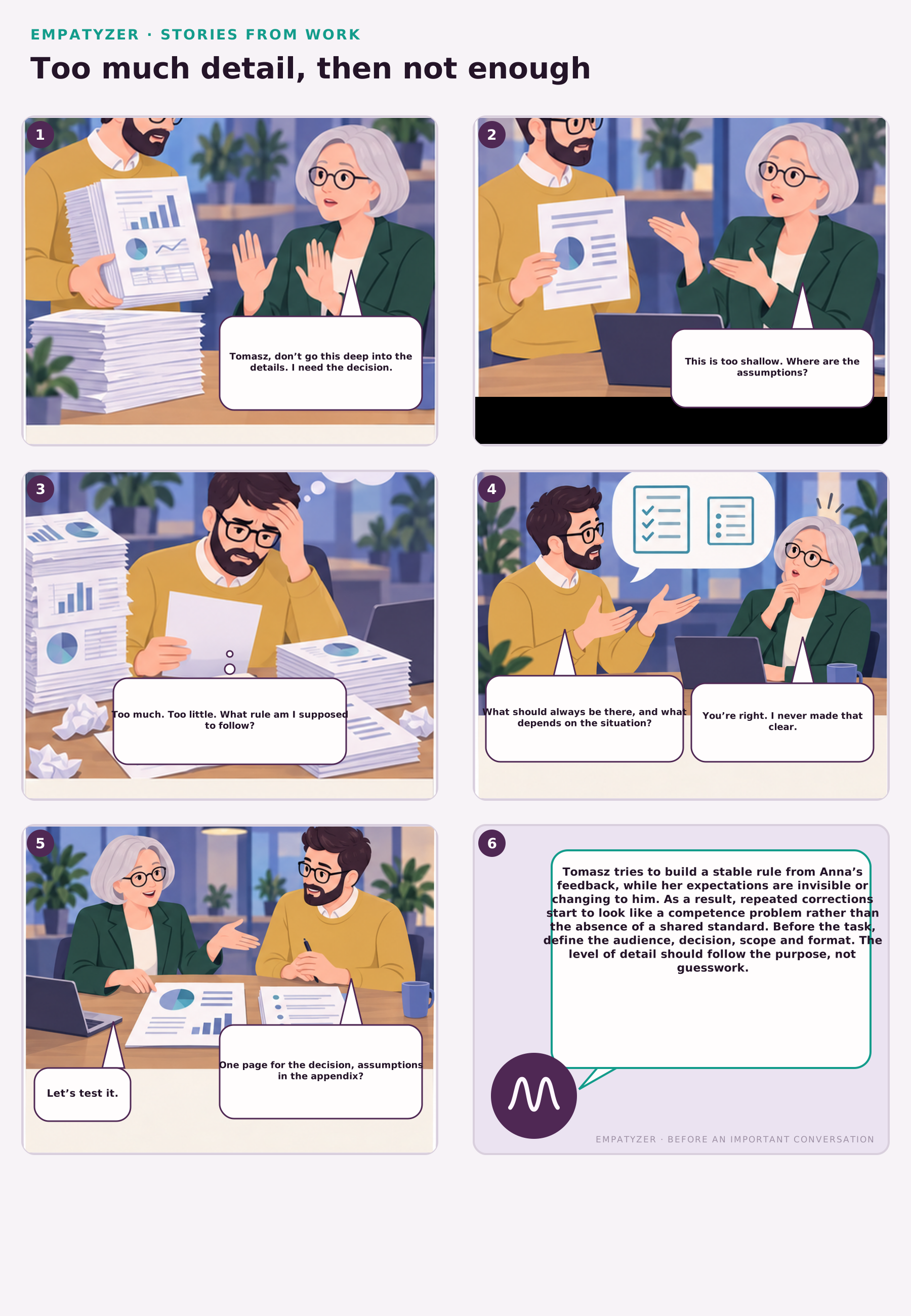
Anna asks Tomasz for more detail and later for less. Tomasz tries to reconstruct a standard that nobody has stated.
Download the full comicPNGSVGPPTX
Anna, Tomasz in panel 1 of Too much detail, then not enough.
Tomek, nie wchodź aż tak w detale. Potrzebuję decyzji.Tomasz, don’t go this deep into the details. I need the decision.

Anna, Tomasz in panel 2 of Too much detail, then not enough.
To jest za płytkie. Gdzie założenia?This is too shallow. Where are the assumptions?

Anna, Tomasz in panel 3 of Too much detail, then not enough.
Za dużo. Za mało. Jaką regułę mam stosować?Too much. Too little. What rule am I supposed to follow?

Anna, Tomasz in panel 4 of Too much detail, then not enough.
Co ma być zawsze, a co zależy od sytuacji?What should always be there, and what depends on the situation?
Masz rację. Nie nazwałam tego jasno.You’re right. I never made that clear.

Anna, Tomasz in panel 5 of Too much detail, then not enough.
Jedna strona decyzji, a założenia w załączniku?One page for the decision, assumptions in the appendix?
Sprawdźmy.Let’s test it.

Em, trenerka Empatyzera
Tomasz próbuje zbudować stałą regułę z feedbacku Anny, a jej oczekiwania są dla niego niewidoczne albo zmienne. Dlatego kolejne korekty zaczynają wyglądać jak problem z jego kompetencją zamiast jak brak wspólnego standardu. Przed zadaniem zdefiniuj odbiorcę, decyzję, zakres i format. Poziom szczegółowości powinien wynikać z celu, nie z domysłu.Tomasz tries to build a stable rule from Anna’s feedback, while her expectations are invisible or changing to him. As a result, repeated corrections start to look like a competence problem rather than the absence of a shared standard. Before the task, define the audience, decision, scope and format. The level of detail should follow the purpose, not guesswork.