.empatyzer / stories← Back to EmpatyzerPL
36 / 55

Differences that change the conversation

I came for an answer. I got a question.

Coaching a oczekiwanie odpowiedzi

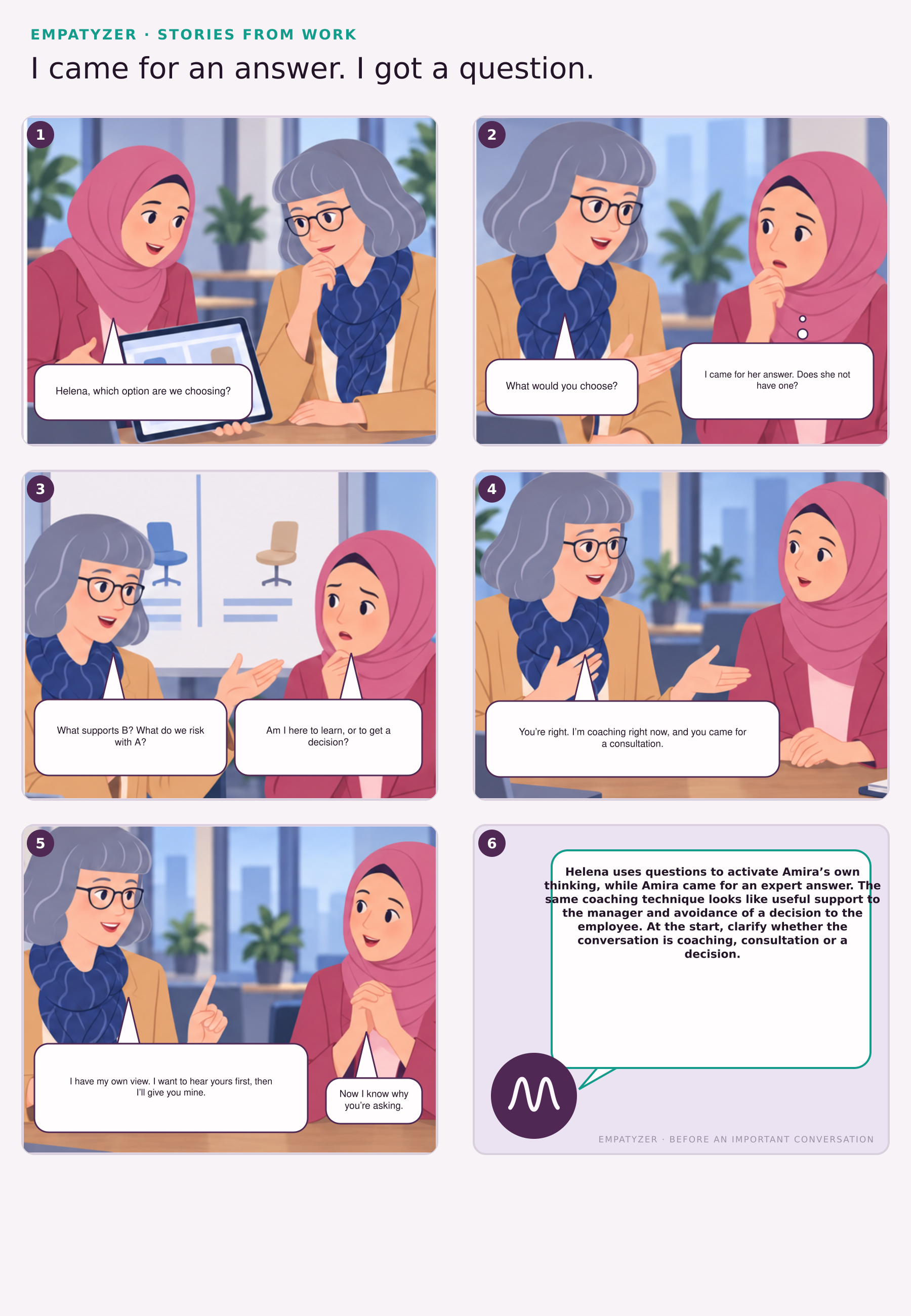
Helena responds with questions to develop Amira’s thinking. Amira came for an expert decision and reads the questions as a lack of help.
Download the full comicPNGSVGPPTX
Helena, Amira in panel 1 of I came for an answer. I got a question..
Hela, który wariant wybieramy?Helena, which option are we choosing?

Helena, Amira in panel 2 of I came for an answer. I got a question..
A ty co proponujesz?What would you choose?
Przyszłam po jej odpowiedź. Czy jej nie ma?I came for her answer. Does she not have one?

Helena, Amira in panel 3 of I came for an answer. I got a question..
Co przemawia za B? Co ryzykujemy przy A?What supports B? What do we risk with A?
Mam się uczyć czy dostać decyzję?Am I here to learn, or to get a decision?

Helena, Amira in panel 4 of I came for an answer. I got a question..
Masz rację. Ja teraz coachuję, a ty przyszłaś po konsultację.You’re right. I’m coaching right now, and you came for a consultation.

Helena, Amira in panel 5 of I came for an answer. I got a question..
Mam własną opinię. Najpierw chcę usłyszeć twoją, potem powiem swoją.I have my own view. I want to hear yours first, then I’ll give you mine.
Teraz wiem, po co pytasz.Now I know why you’re asking.

Em, trenerka Empatyzera
Helena używa pytań, żeby uruchomić samodzielne myślenie Amiry, a Amira przyszła po ekspercką odpowiedź. Ta sama technika coachingowa wygląda dla liderki jak wartościowe wsparcie, a dla pracowniczki jak unikanie decyzji. Na początku rozmowy warto jasno powiedzieć, czy celem jest coaching, konsultacja czy podjęcie decyzji.Helena uses questions to activate Amira’s own thinking, while Amira came for an expert answer. The same coaching technique looks like useful support to the manager and avoidance of a decision to the employee. At the start, clarify whether the conversation is coaching, consultation or a decision.